What qualification context should reach sales
The right qualification context helps a sales representative begin with the caller’s intent instead of reopening the first conversation.
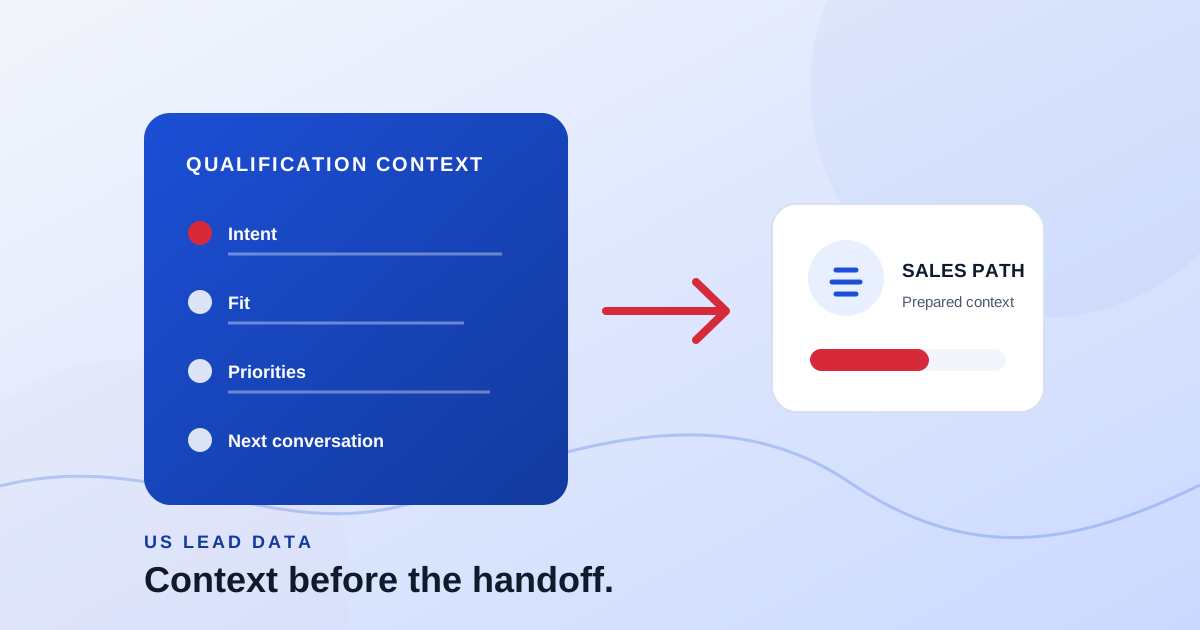
A lead record is most useful when it explains why the caller reached out and what should happen next. A name and a phone number make a follow-up possible, but they do not prepare a sales conversation. For US B2B teams, a qualification flow should turn the first call into context the representative can use.
Define the questions before the call arrives
Qualification works best when the team agrees on the information that changes a sales decision. That might include the caller’s goal, the problem they are trying to solve, the relevant business context, and the timing or next step they have in mind. The exact questions should reflect the team’s own criteria, not a generic script.
- Reason for reaching out and the problem to discuss
- Relevant business context and fit questions
- Priority, timing, and the desired next action
- Details that help the right representative prepare
Separate collection from judgment
An inbound flow can gather consistent answers and flag the information that matters to a handoff. The sales team still decides how to evaluate the opportunity and how to proceed. Keeping those roles clear avoids treating a checklist as a promise about an outcome while giving reps a stronger starting point.
Qualification context should shorten the path to a useful sales conversation, not substitute for one.
Make the next owner clear
Once the needed context is captured, define the next action: a conversation with a representative, a follow-up record for the team, or a route to another part of the business. The goal is a consistent handoff that lets the receiving person see what was learned without asking the caller to repeat it.
US Lead Data helps teams shape thorough inbound qualification around their own criteria. Explore the qualification flow, read the FAQ, or discuss the context your sales team needs.