Compare inbound lead conversations without using call length as quality
A longer call may contain more words without giving sales a clearer next step.
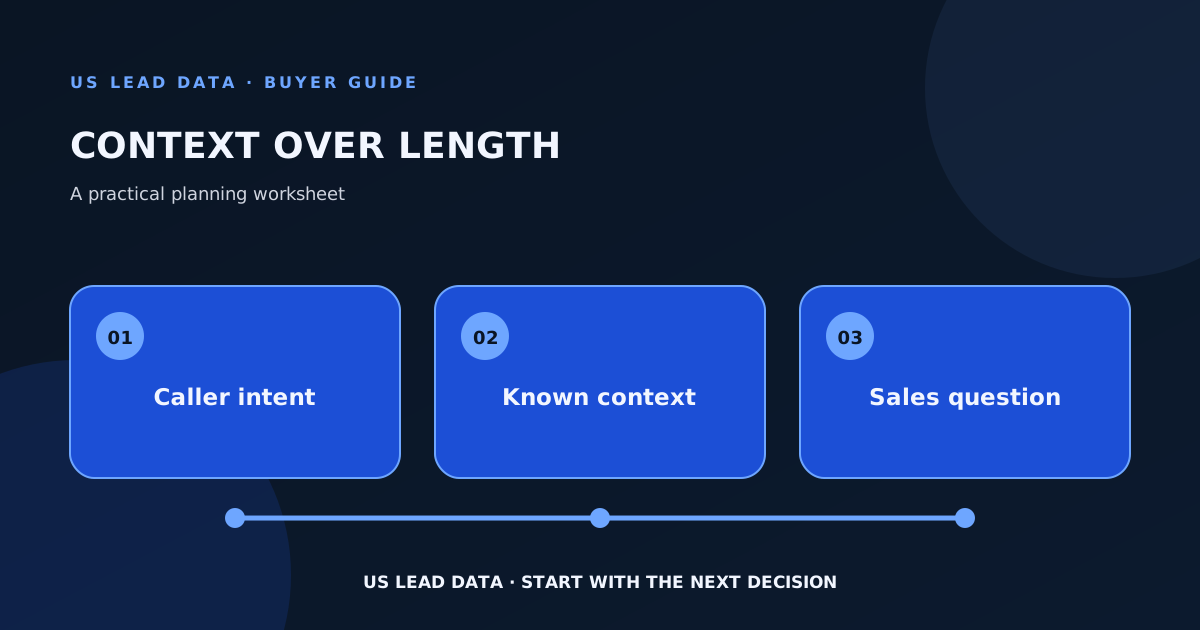
Call duration alone cannot tell a sales team whether an inbound conversation is ready for follow-up. Compare the buyer's reason for calling, the facts they volunteered, what remains unknown, and the next question a salesperson should ask. This is a manual review method, not a claim that US Lead Data measures quality or scores callers.
Put the buyer's purpose first
An inquiry about a defined project may be brief. A long call may wander without clarifying whether the buyer wants a conversation now. Preserve the caller's own description rather than forcing a fit label. The qualification rubric helps decide which facts belong in phone intake and which require sales discovery.
| Review question | Conversation A | Conversation B |
|---|---|---|
| Why did the caller reach out? | Their stated purpose | Their stated purpose |
| What context is actually known? | Facts volunteered or confirmed | Facts volunteered or confirmed |
| What remains for a salesperson? | One next question or decision | One next question or decision |
Illustrative: One buyer quickly asks for a conversation about a specific need but cannot share a budget. Another spends longer discussing general possibilities. Neither should be automatically marked “qualified” or “unqualified.” A salesperson needs to judge fit and timing from the actual context.
Use the comparison to improve the handoff
Ask the sales team whether the note helps them begin a useful conversation. If they repeatedly need the same missing fact, decide whether it belongs in intake or with a salesperson. If the missing fact varies by buyer, adding another universal question may make the first call less clear. The feedback review guide offers a way to revisit that choice later.
Keep the comparison qualitative until you have your own agreed measures and evidence. To talk through a qualification-first inbound path, contact US Lead Data.